 DA
DA  EN
EN  DE
DE  IT
IT  FR
FR  RU
RU  ES
ES  JA
JA  PT
PT  KO
KO  TR
TR  TH
TH  HI
HI  MN
MN  VI
VI  AR
AR In printing consumables, ink is mainly divided into dye-based ink and pigment-based ink. They differ significantly in composition, applicable scenarios, and printing effects.
1. Composition Differences
Dye-based ink: The pigment in the ink is completely dissolved in water or solvent. Its molecules are small and can penetrate into the paper fibers.
Pigment-based ink: The pigment in the ink is suspended in the liquid as tiny particles. It does not dissolve and can adhere to the paper surface.
2. Printing Effects
Dye-based ink: Vibrant colors and natural transitions, suitable for photo printing and high-saturation images.
Pigment-based ink: Water and light resistant, with clear text edges, suitable for document printing and long-term preservation.
3. Suitable Paper
Dye-based ink requires paper with good absorbency; otherwise, it is prone to smudging.
Pigment-based ink is more adaptable to different paper types and maintains clarity even on non-absorbent paper.
4. Durability
Dye-based ink has vibrant colors but weaker water and light resistance.
Pigment inks offer high durability, making them suitable for long-term document archiving or outdoor labels.
Ink type selection should be based on printing needs: dye-based inks are preferred for photo printing, while pigment inks are preferred for documents and long-term archiving.
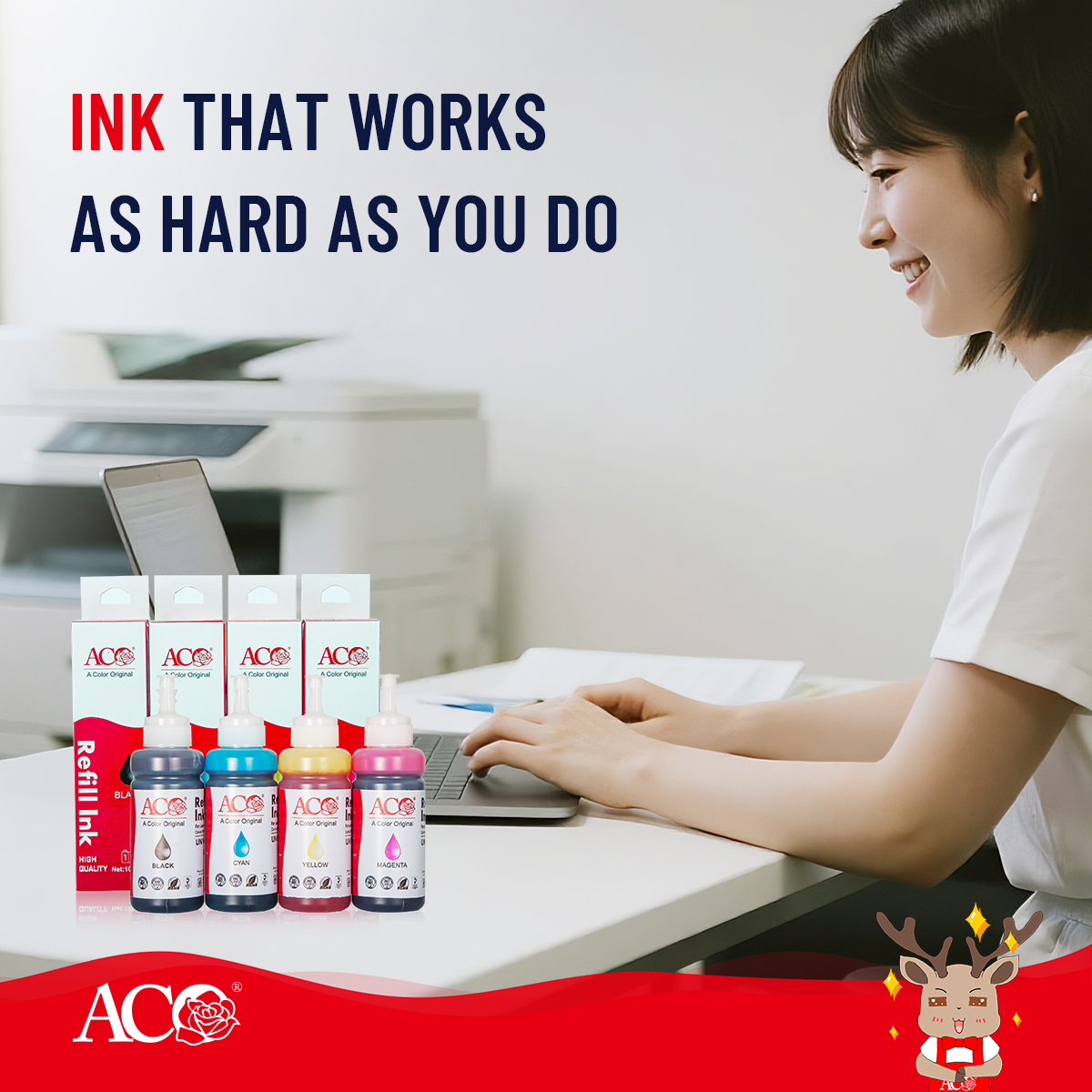
ACO dye-based and pigment inks offer a balance of color and durability, providing professional solutions for diverse printing requirements.